What to measure
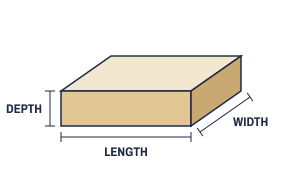
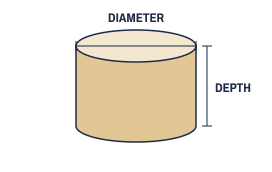
How to use the dirt calculator
- Pick a rectangle or circle and enter the size of the area.
- Enter the depth you need to add — the difference between the current and finished grade.
- Choose fill dirt or topsoil; the weight per yard differs.
- Keep 20% settling for fill unless you know better.
For a sloped fill, use the average depth: measure the depth at several points and average them.
The formula
- Cubic yards = length × width × depth (all in feet) × (1 + settling) ÷ 27
- Tons = cubic yards × 1.2 for fill dirt (1.1 for topsoil)
Worked example: raising a 10 × 10 ft low spot by 6 in
- 10 × 10 × 0.5 = 50 cu ft
- Plus 20% settling: 60 cu ft = 2.22 cubic yards
- 2.22 × 1.2 = 2.67 tons of fill dirt
Ordering tips
Dirt is usually sold by the cubic yard for delivery, by the ton at quarries. Ask whether the supplier’s “yard” is loose or compacted — loose is the norm. For small jobs, a pickup bed holds roughly 1–2 cubic yards depending on its size; check your truck’s payload against the tonnage above.
Dirt by area and depth
Fill dirt with the default 20% for settling.
| Area | Depth | Cubic yards | Tons |
|---|---|---|---|
| 10 × 10 ft | 3 in | 1.11 | 1.33 |
| 10 × 10 ft | 6 in | 2.22 | 2.67 |
| 10 × 10 ft | 12 in | 4.44 | 5.33 |
| 20 × 20 ft | 6 in | 8.89 | 10.67 |
| 20 × 20 ft | 12 in | 17.78 | 21.33 |
| 30 × 40 ft | 6 in | 26.67 | 32 |
| 50 × 50 ft | 12 in | 111.11 | 133.33 |
Common mistakes
- Measuring depth at one spot. Low areas are rarely flat. Take several depth readings across the area and use the average.
- Leaving out settling. Loose dirt shrinks once it’s compacted or rained on, and a second small delivery costs more than the extra yard.
- Using fill dirt as the top layer. Grass and plants struggle in it; finish with topsoil, as described above.
- Overloading a pickup. A cubic yard of dirt weighs over a ton, and wet soil more. Check the tonnage against your truck’s payload before hauling it yourself.
Frequently asked questions
How much does a cubic yard of dirt weigh?
Fill dirt is about 1.2 tons (2,400 lb) per cubic yard and topsoil about 1.1 tons when dry. Wet soil can weigh 1.5 tons or more, so treat tonnage as an estimate.
How much extra dirt should I order for settling?
Fill dirt compacts 20–25% once it's tamped or rained on, topsoil 10–15%. The calculator adds 20% by default for fill — raise it if you'll compact heavily with a plate compactor.
What's the difference between fill dirt and topsoil?
Fill dirt is subsoil with little organic matter — stable, cheap and right for raising grade or backfilling. Topsoil is the organic top layer that plants grow in. Use fill underneath and finish with 4–6 inches of topsoil where you want grass.
How many square feet does a yard of dirt cover?
At 6 inches deep, one cubic yard covers 54 sq ft; at 4 inches, 81 sq ft; at 2 inches, 162 sq ft — before settling.
How much dirt do I need to raise a 20 × 20 ft area 6 inches?
8.89 cubic yards with 20% for settling, about 10.67 tons of fill dirt. Without the settling allowance it would be 200 cu ft, or 7.41 cubic yards.
How much dirt to fill a round area?
Choose Circle and enter the diameter. An 8 ft round low spot 6 inches deep needs 1.12 cubic yards with 20% for settling, about 1.34 tons.
Why does topsoil come out lighter than fill dirt?
We use 1.1 tons per cubic yard for topsoil and 1.2 for fill dirt. A 10 × 10 ft area 6 inches deep with 10% settling is 2.04 cubic yards of topsoil (about 2.24 tons), against 2.22 cubic yards and 2.67 tons of fill dirt with 20%.
Sources
Formulas and defaults last reviewed October 30, 2026. How we check our math.