What to measure
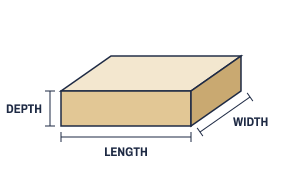
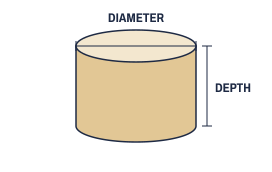
How to use the stone calculator
Choose a rectangle or circle, enter the size and the depth of stone, then pick the stone. The density next to each name is what the calculator uses to turn cubic yards into tons. Add a price per ton to see the bulk cost.
The formula
- Cubic yards = length × width × depth (all in feet) ÷ 27
- Tons = cubic yards × density (1.35 t/yd³ for crushed stone)
- Bags = cubic feet ÷ 0.5, rounded up
Worked example: 10 × 10 ft, 4 in of crushed stone
- 10 × 10 × (4 ÷ 12) = 33.3 cu ft = 1.23 cubic yards
- 1.23 × 1.35 = 1.67 tons
- 33.3 ÷ 0.5 → 67 bags
- As pea gravel (1.4 t/yd³) the same area takes 1.73 tons.
Crushed stone sizes
| Grade | Size | Typical use |
|---|---|---|
| #1 | 2–4 in | Large fill jobs |
| #3 | ½–2 in | Drainage, railroad bed |
| #5 | 1 in and smaller | Road and paver base |
| #57 | about ¾ in | Drainage, landscaping, concrete |
| #67 | ¾ in and smaller | Road and slab base, fill |
| #8 | ⅜–½ in | Concrete mixes |
| #10 | Screenings / dust | Pavers and concrete block |
Sizes and uses from Ozinga’s grade guide. Names vary by state and quarry, so check what your supplier calls each one.
Crushed stone by area
| Area and depth | Cubic yards | Tons | 0.5 cu ft bags |
|---|---|---|---|
| 100 sq ft, 4 in | 1.23 | 1.67 | 67 |
| 200 sq ft, 4 in | 2.47 | 3.33 | 134 |
| 240 sq ft (12 × 20 ft), 6 in | 4.44 | 6 | 240 |
| 400 sq ft, 4 in | 4.94 | 6.67 | 267 |
| 600 sq ft (12 × 50 ft drive), 6 in | 11.11 | 15 | 600 |
| 1,000 sq ft, 4 in | 12.35 | 16.67 | 667 |
Common mistakes
- Ordering for the loose depth on a compacted base. A plate compactor packs stone down, so a 4 in finished base needs more than 4 in of loose stone. Ask your supplier how much extra to allow.
- Clean stone where you need fines. Washed stone like #57 drains well but doesn’t lock together. For a base that should pack hard, ask your supplier for a base grade that includes the smaller sizes.
- Mixing up tons and yards. A yard of crushed stone is about 1.35 tons, not 1. Comparing a per-ton price with a per-yard price without converting gives the wrong cheaper option.
- Underestimating the weight. Each ton is 2,000 lb. Most pickups can’t carry a ton in one trip; check the payload or have it delivered.
Frequently asked questions
How much does a cubic yard of crushed stone weigh?
About 1.35 tons (2,700 lb) per loose cubic yard. Gravel and pea gravel run closer to 1.4 tons. Stone size and moisture move these figures, so use your quarry's number when they give one.
How much crushed stone do I need for a 10 × 10 ft area?
At 4 inches deep, 33.3 cu ft, which is 1.23 cubic yards or 1.67 tons of crushed stone, or 67 bags of 0.5 cu ft.
How many square feet does a ton of crushed stone cover?
About 80 sq ft at 3 inches and 60 sq ft at 4 inches, at 1.35 tons per cubic yard.
What size crushed stone should I use?
It depends on the job. Ozinga's grade guide lists #57 (about ¾ in) for drainage, landscaping and concrete, #3 (½–2 in) for drainage, #67 (¾ in and smaller) for road and slab base, and #10 screenings for paver and block work.
How deep should crushed stone be for a patio base?
About 6 inches of compacted crushed stone under patios and walkways and 10 inches or more under driveways, per Unilock's guide, which the paver calculator also uses. Order for the compacted depth plus some extra, since loose stone compacts.
Is stone sold by the ton or the yard?
Quarries usually sell by the ton and landscape yards often by the cubic yard. The calculator gives both, so you can compare prices either way.
When do bags make sense?
For small jobs. A 0.5 cu ft bag holds 1/54 of a cubic yard, so one ton of crushed stone is about 40 bags. Past a ton or so, bulk delivery is usually far less work.
Sources
Formulas and defaults last reviewed October 30, 2026. How we check our math.