What to measure
How to use the insulation calculator
- Choose the attic floor or a floor over an unheated space.
- Pick your climate zone and, for an attic, whether it already has 3–4 inches.
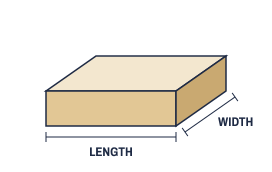
- Enter the area’s length and width.
- Pick the insulation. For blown products, check the R-value per inch against the bag’s coverage chart; batts are named by their R-value.
- Optional: enter how many square feet one bag covers at your R-value for a bag count.
The formula
- R-value to add = ENERGY STAR’s recommendation for your zone and situation
- Depth (blown) = R-value ÷ R-value per inch: 3.0 for blown fiberglass, 3.7 for cellulose
- Batts = one or two standard batts (R-13, R-19, R-30, R-38) that add up to the target
- Volume = area × depth
- Bags = area ÷ bag coverage, rounded up
Worked example: 30 × 40 ft attic in zone 4, no insulation
- ENERGY STAR target: R60
- Blown fiberglass at R-3 per inch: 60 ÷ 3 = 20 in settled
- Area 1,200 sq ft; volume 1,200 × 20 ÷ 12 = 2,000 cu ft
- AttiCat bags cover 31.1 sq ft each at R-60: 1,200 ÷ 31.1 = 38.6 → 39 bags
- With batts instead: two layers of R-30
ENERGY STAR R-values to add
| Zone | Attic, none | Attic, 3–4 in already | Floor |
|---|---|---|---|
| 1 | R30 | R25 | R13 |
| 2 | R49 | R38 | R13 |
| 3 | R49 | R38 | R19 |
| 4A, 4B | R60 | R49 | R19 |
| 4C, 5, 6 | R60 | R49 | R30 |
| 7, 8 | R60 | R49 | R38 |
Frequently asked questions
How much attic insulation do I need?
ENERGY STAR recommends adding R30 in zone 1, R49 in zones 2 and 3, and R60 in zones 4 through 8 to an uninsulated attic. If the attic already has 3–4 inches, add R25 in zone 1, R38 in zones 2–3 and R49 in zones 4–8.
How many inches of insulation is R60?
About 20 inches of blown fiberglass. Owens Corning's AttiCat chart lists 20 in of settled depth for R-60, roughly R-3 per inch. Cellulose gives more R-value per inch, about R-3.7 (U.S. GreenFiber lists R-38 at 10.3 in), so R-60 is about 16 inches. Your bag's own chart is the final word.
Which climate zone am I in?
Zones run from 1 in the warmest parts of the country to 7 and 8 in the coldest, and many states span more than one. Look up your county on the IECC climate zone map that ENERGY STAR and the Department of Energy publish.
How much insulation goes under a floor?
Over an unheated crawlspace or garage, ENERGY STAR recommends R13 in zones 1–2, R19 in zones 3 and 4A/4B, R30 in zones 4C, 5 and 6, and R38 in zones 7–8.
Why use the bag chart instead of R per inch?
Blown insulation is sold by coverage, not volume. The chart on each bag lists, for every R-value, the minimum settled thickness and how many square feet one bag covers, which already accounts for settling.
Which batts do I need for R-60?
Two layers of R-30 make R-60. Batts are sold by their printed R-value, so add layers up to the target; for R-49, lay R-30 and R-19. The calculator picks the combination for your zone.
Should I choose blown-in insulation or batts?
Either works if it reaches the full R-value without gaps. Blown-in fills around joists, wiring and odd corners and is quick to add on top of old insulation. Batts are easy to lay on an open attic floor or fit between floor joists.
Sources
Formulas and defaults last reviewed October 30, 2026. How we check our math.